Hot take: if your “window cleaning” plan starts and ends with a garden hose and a squeegee, you’re not cleaning windows, you’re just moving dirt around until the sun hits it.
And yeah, I get why people do it. It’s quick. It feels productive. Then the glass dries, the mineral spots bloom like a bad surprise, and suddenly your “clean” windows look kind of… cloudy. Professional window cleaning is built to prevent that outcome, not chase it afterward.
One line version: pros aren’t just cleaning glass, they’re managing a whole window system.
The pro process starts before the first drop of water
A real service begins with a pre-inspection. Not a dramatic one. Just a calm, deliberate check of what you’re dealing with, because understanding how professional window cleaning works starts with knowing the glass, frames, and surrounding materials before any water or solution touches the surface:
– Glass type and condition (coatings, film, scratches, existing etching)
– Frame material (vinyl, aluminum, painted wood, composite)
– Seal/caulk condition and any obvious gaps
– Track and sill buildup (the stuff that will smear onto the glass if ignored)
Look, this part is boring… until it saves a window. I’ve seen low-E coatings get hazed by the wrong chemical, and I’ve seen old oxidized aluminum frames leave black streaks that homeowners swear “came from the cleaner.” They didn’t. They were always there, just waiting for moisture.
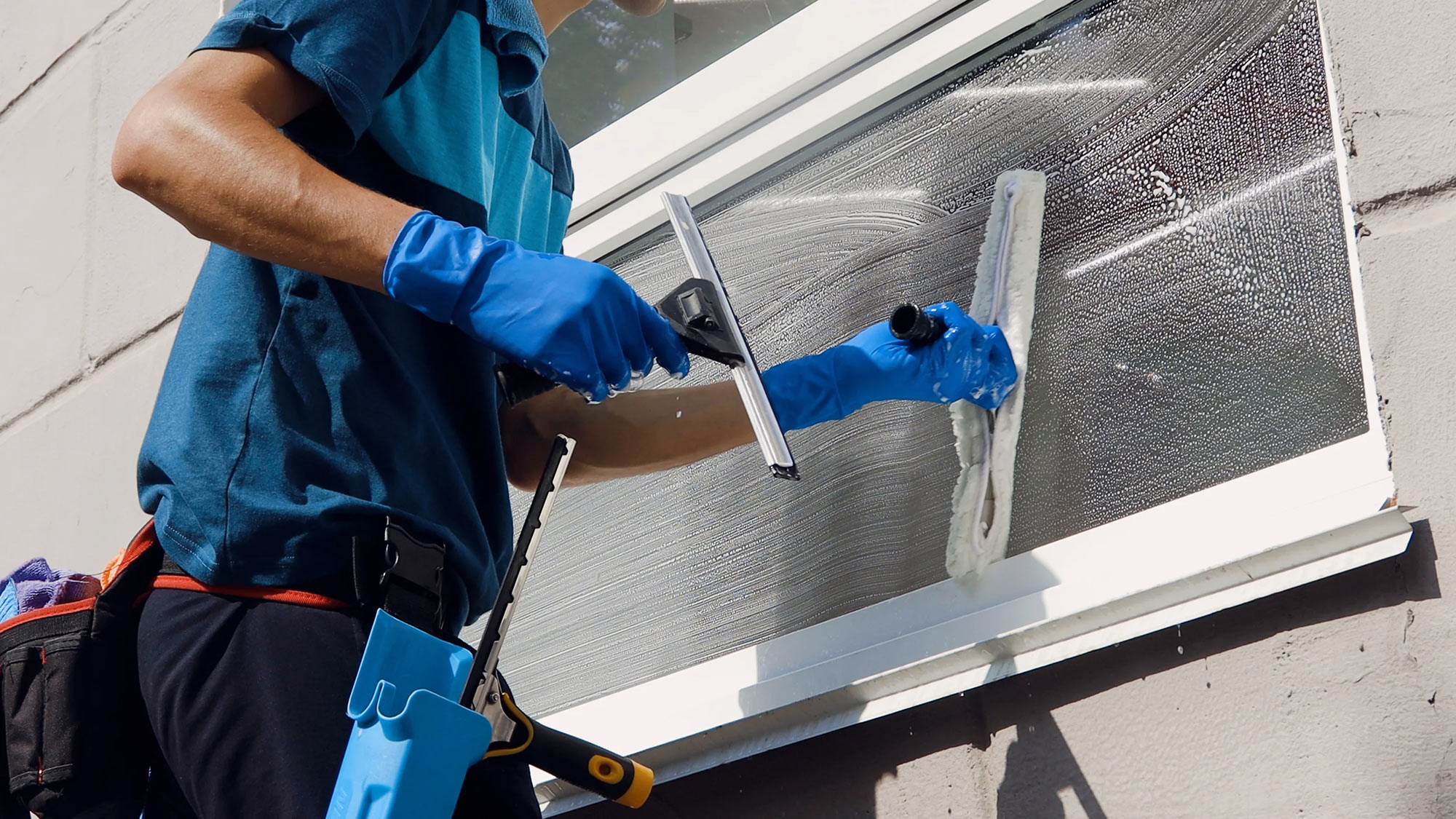
“A wipe” doesn’t fix mineral deposits, film, or micro-scratches
The glass can be spotless and still look terrible. That’s the part people miss.
Professional cleaners pay attention to the grime you can’t see until the light is low and the sun is angled just right: mineral haze, oxidation film, airborne pollution residue, and the faint abrasions that make reflections look dull.
And here’s the thing: good techs don’t chase speed. They chase repeatable technique.
That means controlled strokes, correct dilution, clean applicators, and water quality checks. Water quality isn’t a detail, it’s the whole game. If you rinse with hard water and let it air-dry, you’re basically “printing” minerals onto the glass.
A quick, concrete stat to put teeth in that idea: hard water buildup reduces water heater efficiency by up to ~48% in extreme cases, because scale acts as insulation on surfaces (U.S. Department of Energy). Different surface, same principle: minerals don’t just “look bad,” they cling and compound over time.
Source: https://www.energy.gov/energysaver
Exterior cleaning isn’t just glass, your building wears the dirt
Sometimes the dirtiest part of a “window cleaning” job is everything around the window.
Cladding, trim, brick edges, painted fascia, metal flashing… all of it collects grime that migrates back onto the glass the minute moisture returns. Pros assess exposure (wind-driven rain side vs. sheltered side), then choose tools that won’t shred finishes.
A hose blasts water everywhere. Professionals control it.
A typical exterior sequence is more like: loosen debris, agitate with the right brush for the texture, rinse with intention, then detail edges so runoff doesn’t dry into streaks. If there’s caulk separation or a failing seal, they’ll flag it, because that “tiny crack” becomes rot, mold, and a draft you can feel in January.
One-line reality check.
Neglected seals make clean windows pointless.
Sills vs. frames: same neighborhood, different rules
Sills and frames get lumped together, but they behave differently.
Sills are grime shelves. They collect dust, pollen, dead bugs, and that gritty mix that turns into sludge when you add water. Frames are structural borders, full of joints where moisture can sneak in and start causing swelling, staining, or corrosion.
So the method changes. Less soaking. More controlled wiping. Mild cleaners. Quick drying. And no, a garden hose doesn’t count as “controlled.”
Now, this won’t apply to everyone, but… if you have older painted wood frames, excess water is not your friend. I’ve watched perfectly “cleaned” windows develop paint bubbles because someone treated them like vinyl.
Tracks are where DIY goes to die (politely)
Tracks need deep cleaning, but they need it surgically.
A good approach doesn’t flood them. It dislodges grit first, then lifts residue in small sections, then dries thoroughly so hardware doesn’t start corroding. Corners and glazing channels are the usual horror spots.
What it looks like in practice:
– Dry brush or vacuum loose debris
– Minimal moisture applied to microfiber (not poured into the track)
– Detail brush in corners and channels
– Wipe, rinse residue off tools, repeat
– Dry the track completely before closing the sash
If you close a window onto wet sludge in the track, you’ve basically rebuilt the problem, tighter.
Hard water stains: not “dirt,” not “streaks,” not the same thing
Mineral deposits are chemistry problems. Treat them like one.
Pros identify what they’re seeing, fresh mineral spotting, long-term calcium scale, or actual etching (which looks similar but doesn’t clean off because the glass surface is damaged).
A common professional escalation ladder:
- Non-abrasive glass cleaner, test spot
- Specialty mineral remover or chelating agent (controlled dwell time)
- Buffered acid-based products only when appropriate and only with full rinse discipline
- If it’s etched: manage expectations, discuss restoration options
Aggressive scrubbing is how people permanently haze glass. I don’t care how “soft” the pad claims to be, if it’s the wrong pad for the wrong glass, it’ll leave a mark you can’t unsee.
(And yes, you always protect frames and hardware first. Acid runoff and aluminum don’t get along.)
High-reach work: the part nobody should “just try once”
High windows aren’t a courage test.
Professional high-reach cleaning involves equipment choice, fall protection planning, ladder or lift procedures, and water management, especially if using water-fed pole systems with purified water. The technique is different when you’re working above landscaping, near power lines, or over awkward footing.
Good crews run it like a checklist, not a vibe:
– Anchors confirmed (if harnessed work is required)
– Ladder angle and stabilization verified
– Tools secured so you’re not balancing with one hand
– Clear communication with anyone below
If you’ve ever tried to squeegee a third-story pane while your ladder flexes slightly, you already understand why pros charge what they charge.
Coatings, tint, and “special glass” don’t tolerate guesswork
Modern glass can be surprisingly picky. Low-E coatings, aftermarket tint film, hydrophobic treatments, self-cleaning glass, each has rules about cleaners, abrasives, pressure, and dwell time.
Here’s the specialist briefing version: chemical compatibility and abrasion thresholds matter more than “strength.” A harsh product might remove grime fast, but it can also degrade coatings, create uneven sheen, or void manufacturer guidance.
So pros test discreetly, use the gentlest effective chemistry, and rinse thoroughly. They’re not being precious. They’re being practical.
Seals, caulking, and weatherproofing: cleaning reveals what’s failing
Window cleaning exposes failures you don’t see when everything’s dusty.
When the frame is wiped clean and the sill is detailed, it becomes obvious where caulk has cracked, where seals have gaps, and where moisture is tracking. That matters for comfort and efficiency, sure, but it also matters because water intrusion quietly destroys wood, drywall, and insulation.
A pro will typically:
– Note cracked or peeling sealant
– Flag gaps at joints and corners
– Watch for staining patterns that suggest leaks
– Recommend appropriate reseal timing (without slapping caulk on everything)
In my experience, the best window cleaners aren’t afraid to tell you, “This is a repair issue, not a cleaning issue.” That’s a good sign.
Eco-friendly cleaning: it’s not a marketing label if it’s done correctly
Eco-friendly window cleaning isn’t just “use vinegar.”
It’s about low-toxicity chemistry and better technique: less runoff, better water control, biodegradable solutions where appropriate, microfiber systems that reduce chemical reliance, and, if the job calls for it, deionized water that dries spot-free without additives.
Practical approach:
– Neutral pH products for routine work
– Phosphate-free, low-VOC solutions when needed
– Distilled or DI rinse water to avoid mineral spotting
– Minimal product, maximum technique
If you’ve got plants under the windows, this is where a pro’s habits really show. Sloppy runoff can scorch sensitive landscaping.
Scheduling and aftercare: boring, useful, money-saving
Most clients think they’re buying “clean windows.” They’re also buying a maintenance rhythm.
Professionals work around weather, sun glare, access constraints, and safety requirements. After the job, a solid service doesn’t just leave, it documents issues, gives basic care guidance, and sets expectations for future staining risk (especially if you’re on hard water or near irrigation overspray).
Aftercare is usually simple:
– Don’t use abrasive pads or harsh degreasers on glass
– Keep sprinklers from hitting windows if possible
– Address failing caulk/seals before the next rainy season
– Maintain a cadence so deposits don’t turn into restoration projects
Because once mineral buildup “bakes in,” cleaning turns into correction. And correction costs more.
If you want the honest difference in one sentence: professional window cleaning is a controlled system, inspection, correct chemistry, surface-specific technique, and safety, while hose-and-squeegee cleaning is mostly optimism.