How to Restore Your Home After Water Damage: A Step-by-Step Guide
Dealing with water damage at home can be overwhelming. But don’t worry—you can tackle it one step at a time! Here’s a simple, practical guide to help you restore your space safely and efficiently.
- Safety First! Assess the Situation
Before you grab a mop, take a moment to make sure it’s safe to enter the affected area. If the situation seems overwhelming or you’re unsure where to start, you might want to consider reaching out to professionals who specialize in water damage restoration.
Here’s what to do:
– Check for hazards: Look for things like sagging ceilings, weakened floors, or exposed wires.
– Turn off electricity: If water has reached electrical outlets or appliances, shut off the power to avoid shocks.
– Wear protective gear: Think waterproof boots, gloves, goggles, and (if there’s a musty smell) a mask for possible mold.
– Open windows: Ventilate the area to keep air fresh and reduce airborne contaminants.
– Take photos: Snap pictures of all damage for insurance claims.
- Stop the Water & Get Rid of What’s Left
Your next goal: stop more water from coming in and remove what’s already there.
How to Find the Source
– Look for damp spots, water stains, or drips near pipes, appliances, and ceilings.
– Use a moisture meter if you have one—it’s great for finding hidden leaks.
– Check plumbing fixtures and seals. Sometimes the culprit is as simple as a loose joint.
Shut Off the Water
– Find your home’s main water valve (usually in the basement, garage, or outside).
– Turn it clockwise to stop the flow completely.
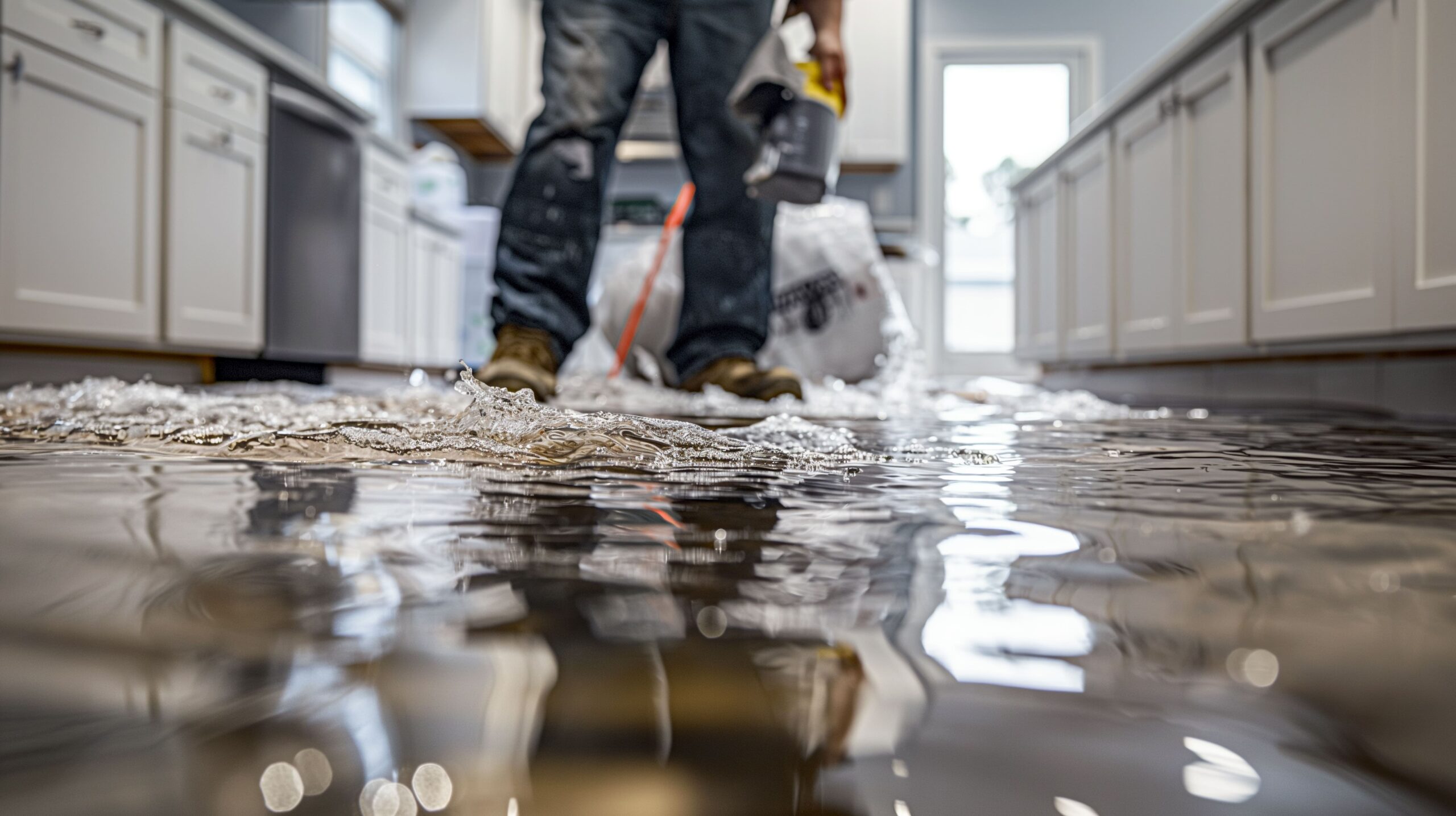
Remove Standing Water
– For small puddles: Use towels, mops, or a wet/dry shop vacuum.
– For bigger floods: Rent or borrow a sump pump, and set it up at the lowest spot in the room.
– Keep an eye on the pump and clear debris so it doesn’t clog.
- Dry It Out & Let Air In
Once the water’s gone, it’s drying time!
Tips to speed things up:
– Set up fans and dehumidifiers to keep air moving and suck out moisture.
– Open windows and doors, if weather allows, to create cross-ventilation.
– Use air movers (those strong, carpet-drying fans) for hard-to-reach spots.
– Keep checking with a moisture meter or hygrometer to make sure everything’s drying evenly.
- Remove Damaged Stuff
Some things, unfortunately, just can’t be saved.
What to toss:
– Soaked drywall, insulation, and carpeting (they’re mold magnets).
– Any furniture or items that are too saturated or starting to smell.
– Porous items that can’t be fully cleaned, like old mattresses or pillows.
How to dispose:
– Bag everything up tightly to avoid spreading mold spores.
– Take photos and keep a list for your insurance company.
- Clean & Disinfect
Now, let’s make sure your home is safe and sanitary!
How to do it right:
– Use an EPA-registered disinfectant (look for ones that kill mold and bacteria).
– Scrub all surfaces—especially where water touched.
– Pay special attention to high-touch spots like doorknobs and light switches.
– Follow the cleaner’s instructions for how long it needs to sit on surfaces.
– Keep the area well-ventilated while cleaning.
- Repair & Restore
Time to rebuild!
What to check:
– Framing, drywall, insulation, and floors for any lingering moisture or damage.
– Electrical systems—call a pro if you suspect water got into wiring.
– Replace any materials that can’t be cleaned or dried out.
As you rebuild:
– Use antimicrobial treatments on new materials if possible.
– Make sure everything meets local building codes.
– Keep records and receipts for insurance.
Final Thoughts
Restoring your home after water damage can feel like a huge job, but take it step by step—and don’t be afraid to call in professionals for the big stuff (especially mold, structural, or electrical issues). With patience and the right approach, you’ll get your space back to normal in no time!
Tip: If you’re ever unsure, or if the damage is extensive, always consult a restoration specialist. Safety comes first!